In today's digital age, a strong online presence is crucial for business success. A digital marketing audit is the key to achieving this. It provides a comprehensive analysis of your digital marketing efforts.
This audit helps identify strengths and weaknesses in your strategy. It uncovers opportunities for growth and innovation. By conducting a digital marketing audit, you can optimize your online presence.
The process involves several key components. These include a website audit, SEO audit, content audit, social media audit, and PPC audit. Each component plays a vital role in enhancing your digital strategy.
A website audit evaluates technical performance and user experience. It ensures your site is accessible and efficient. An SEO audit focuses on improving search engine rankings.
Content audits assess the quality and relevance of your digital content. Social media audits evaluate engagement and reach. PPC audits optimize paid advertising campaigns for better ROI.
Regular digital marketing audits lead to improved visibility and conversions. They help align marketing efforts with business goals. This guide will walk you through the essential steps for a successful digital marketing audit.
Summary
This guide outlines a comprehensive, data-driven digital marketing audit covering website, SEO, content, social media, and PPC to diagnose performance and uncover growth opportunities. After setting clear objectives and selecting tools, it walks through step-by-step audits, followed by analytics/KPIs, competitor and market analysis, and a prioritized action plan. The benefits include improved visibility, engagement, and ROI through alignment with business goals, while pitfalls are avoided via preparation, stakeholder collaboration, and integrated data. Practical checklists, metrics, and tool recommendations support implementation and ongoing, repeatable audits.
What Is a Digital Marketing Audit?
A digital marketing audit is a thorough evaluation of a company's digital marketing practices. It spans various aspects of marketing strategies and tactics. The process aims to enhance effectiveness and efficiency.
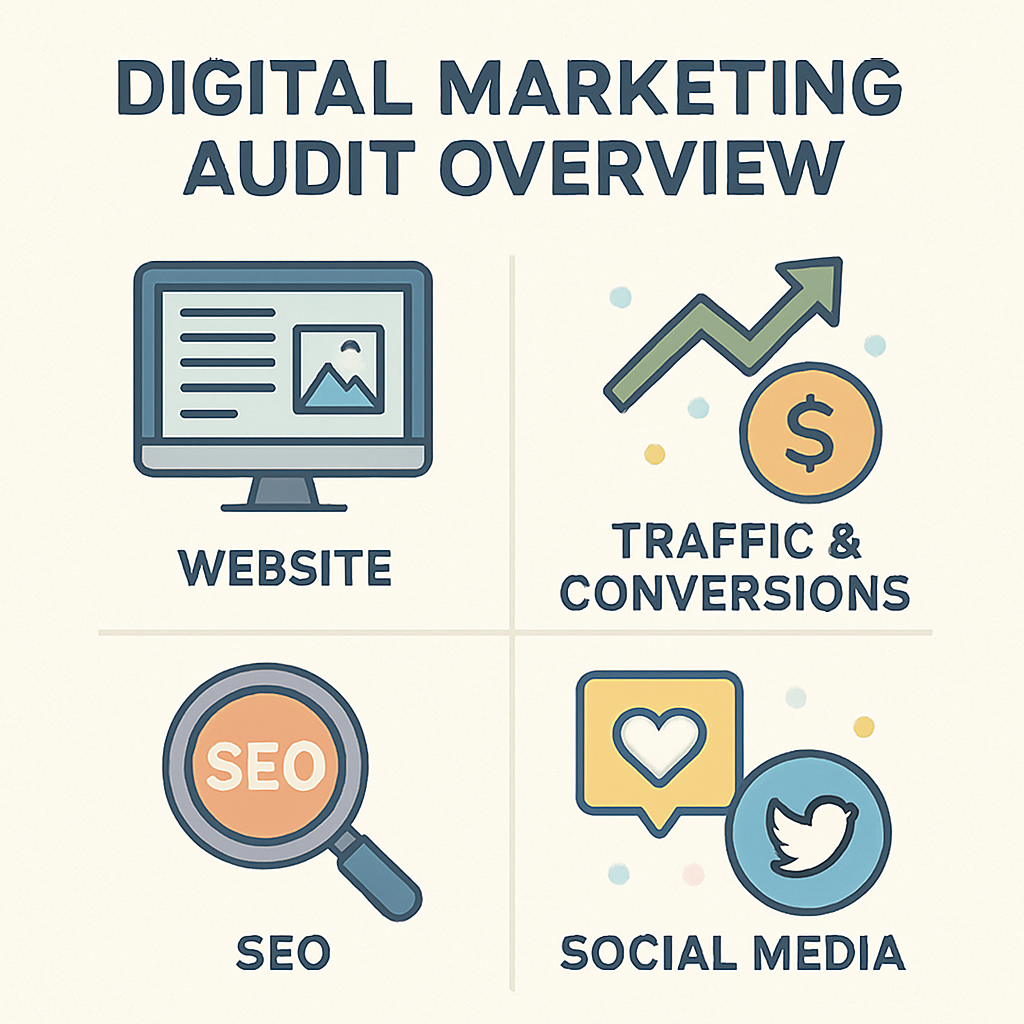
This audit identifies areas needing improvement and innovation. It covers website performance, SEO optimization, content quality, social media engagement, and paid advertising efforts. A digital marketing audit is crucial for sustainable growth.
Key elements of this audit include:
- Website Audit
- SEO Audit
- Content Audit
- Social Media Audit
- PPC Audit
Each element contributes to a holistic view of digital marketing performance. A website audit checks the foundation, including technical issues. The SEO audit assesses searchability and organic rankings.
Content audits focus on relevance and alignment with business objectives. Social media audits measure engagement and audience interaction. PPC audits optimize ad spend and conversion rates.
A successful digital marketing audit requires a systematic and data-driven approach. It provides actionable insights for marketing optimization. By uncovering gaps and opportunities, businesses can adapt and thrive in a competitive landscape.
Why Conduct a Digital Marketing Audit?
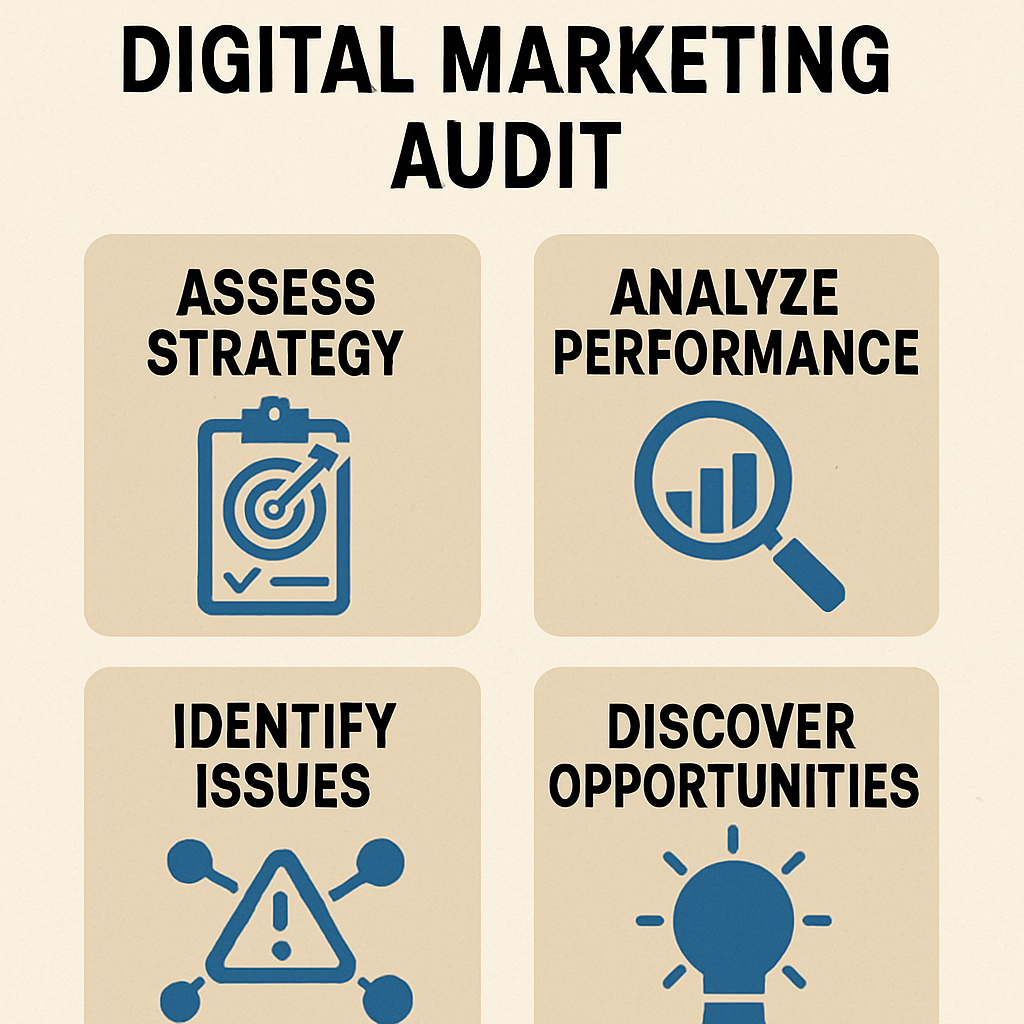
Conducting a digital marketing audit is crucial for ensuring that your strategies align with your business goals. It helps you understand where your marketing efforts excel and where they falter. Without an audit, you might miss both opportunities and threats.
This audit uncovers strengths that you can leverage for greater success. It also identifies weaknesses that need immediate attention. Gaining insights into these areas enables informed decision-making.
The audit process also provides a clearer picture of the competitive landscape. Knowing your competitors' strategies helps you stay ahead. Additionally, it reveals market trends that are crucial for maintaining relevance.
Benefits of a digital marketing audit include:
- Increased ROI through optimized strategies
- Enhanced customer engagement and satisfaction
- Identification of growth opportunities
- Improved resource allocation and budget management
Engaging in a digital marketing audit results in a refined strategy. It aligns marketing efforts with business objectives, driving better outcomes. Regular audits contribute to long-term success and adaptability.
Ultimately, a digital marketing audit is more than a review. It's a strategic tool for navigating the dynamic digital landscape and achieving business excellence.
Preparing for Your Digital Marketing Audit
Before diving into a digital marketing audit, preparation is key. This step ensures an efficient and thorough process. Start by clearly defining what you intend to achieve with the audit.
Setting objectives is crucial. Know what you are auditing and why. This could range from boosting SEO performance to enhancing content relevance.
Identify stakeholders involved in the audit process. Collaborating with different departments adds value. Their insights can uncover overlooked areas and improve outcomes.
Organize your data and resources before starting. Gather information from all digital channels. This ensures you have a comprehensive view of your digital marketing efforts.
Tools play an essential role in a thorough audit. Choose tools that align with your audit objectives. Popular options include:
- Google Analytics
- SEMrush
- Ahrefs
Consider your current marketing strategy. Analyze its alignment with your brand and business goals. This step reveals areas that need adjustment.
Create a timeline and checklist to guide the audit process. Checklists help maintain consistency and ensure nothing is overlooked. Example checklist items include:
- Reviewing website performance
- Analyzing social media metrics
With preparation complete, you'll have a focused approach for the audit. This groundwork maximizes the value and effectiveness of your findings.
 by sarah b (https://unsplash.com/@sixthcitysarah)
Step 1: Website Audit -- Evaluating Your Digital Foundation
A website audit is the cornerstone of a digital marketing audit. It provides insights into your website's functionality and health. A robust website sets the stage for online success.
Technical performance is critical. Ensure your website loads quickly. Slow load times frustrate visitors and impact SEO.
Broken links on a site diminish user experience. Identify and fix these links promptly. This step helps improve site navigation.
Evaluate mobile responsiveness. Increasing mobile usage requires a seamless experience across devices. A mobile-friendly site can increase engagement.
Check website security measures. HTTPS is a must for SEO and user trust. Ensure your SSL certificate is up to date.
Consider website structure and navigation. Logical, clear menus improve user experience. This helps search engines understand your content better.
Content quality cannot be ignored. Evaluate relevance and engagement of on-site content. Content aligned with user needs retains visitors.
User Experience (UX) involves more than content. Analyze design elements and usability. Attractive, intuitive designs encourage visitor retention.
Accessibility is equally vital. Your site should be usable by all, including those with disabilities. Compliance with standards such as WCAG ensures inclusivity.
Tools like Screaming Frog can assist in a detailed audit. These tools crawl sites to detect issues. Utilizing them streamlines the auditing process.
Collect and organize findings. Create a report highlighting key issues and strengths. This report guides strategic improvements.
Regular website audits ensure ongoing performance. They help in adapting to algorithm changes. Consistent auditing supports continuous growth.
 by Vincent Chan (https://unsplash.com/@okcdz)
Technical Website Audit Checklist
A comprehensive checklist simplifies the audit process. Here are key technical aspects to examine:
- Page speed: Test for fast loading.
- Mobile responsiveness: Check for correct display on devices.
- Security protocols: Confirm HTTPS implementation.
Verify structured data usage. Proper schema markup boosts search visibility. It ensures accurate data representation in SERPs.
Assess server and hosting performance. Reliable hosting improves uptime. It also supports fast page delivery.
Evaluate site architecture. A well-structured layout aids SEO. It also enhances user experience and navigation.
 by Giorgio Tomassetti (https://unsplash.com/@gtomassetti)
User Experience and Accessibility Review
User experience can make or break a website's effectiveness. Review your site's visual design. Aesthetics should complement functionality.
Navigation should be intuitive. Users should find what they need effortlessly. Complicated menus deter engagement.
Assess call-to-action (CTA) placements. Strategically placed CTAs enhance conversion rates. They guide users towards desired actions.
Examine website accessibility factors. Ensure content is perceivable by all, including screen reader users. Alt text for images enhances accessibility.
Test keyboard navigation. Users should easily navigate using a keyboard. This inclusivity impacts overall user satisfaction.
Document issues and strengths in a usability report. Prioritize fixes based on user impact. Iterative improvements lead to better user experiences.
 by Vitaly Gariev (https://unsplash.com/@silverkblack)
Step 2: SEO Audit -- Maximizing Organic Visibility
SEO auditing is essential for increasing organic search visibility. It identifies areas to enhance and capitalize on search engine potential. Every business seeks better search rankings.
On-page factors are a big part of SEO success. These elements are directly within your control. Ensuring they are optimized is crucial for performance.
Meta tags are vital. Review and optimize titles and descriptions. These snippets draw in users and improve click-through rates.
Keyword analysis is fundamental. Ensure your content targets the right audience. High-performing keywords improve visibility and engagement.
Don't underestimate the impact of headers. They organize content and improve readability. Proper use of H1, H2, and H3 tags provides structure.
Next, focus on off-page SEO components. These factors include backlinks and external site signals. They represent a site's authority to search engines.
A strong backlink profile boosts domain authority. Assess the quality and relevance of your backlinks. Aim for links from credible, related sites.
Utilize tools like Ahrefs for backlink audits. These tools uncover link quality and opportunities. Integrating insights leads to strategic improvements.
SEO audits should be routine. They ensure your strategy adapts to algorithm changes. Regular audits drive consistent growth in search rankings.
Collaboration between SEO and content teams is beneficial. This partnership aligns keyword strategies. It enhances content relevance and search performance.
SEO success is ongoing and requires patience. Consistent efforts yield better rankings. This leads to more organic traffic and conversions.
Create a prioritized SEO action plan. Implement recommendations systematically. Tracking progress ensures accountability and results.
 by Kenny Eliason (https://unsplash.com/@heyquilia)
On-Page SEO Analysis
On-page SEO enhances direct content engagement. It optimizes elements within your control. Key factors include:
- Title tags: Ensure relevance and keyword inclusion.
- Meta descriptions: Write compelling summaries for snippets.
- Keyword density: Maintain natural keyword use.
Metadata accuracy is vital. It provides context for search engines. Regular updates maintain alignment with marketing goals.
Evaluate internal linking structures. Effective internal links improve navigation and SEO. They distribute page authority throughout the site.
Invest in content quality and relevance. Engaging content captures attention. It encourages longer site visits and interactions.
 by Growtika (https://unsplash.com/@growtika)
Off-Page SEO and Backlink Profile
Off-page SEO emphasizes external signals and authority. It includes:
- Link quality: Pursue links from reputable domains.
- Link diversity: A varied profile enhances credibility.
- Anchor text: Use diverse, relevant text for links.
Monitor changes in backlink trends. Detect negative SEO practices early. Prompt action preserves site integrity.
Building backlinks requires strategy. Focus on generating authoritative content. Share valuable insights in guest posts and articles.
Align backlink strategy with overall goals. Integration aids in achieving broader marketing objectives. It supports brand recognition and growth.
 by Javier Haro (https://unsplash.com/@capturedbyjavi)
Step 3: Content Audit -- Assessing Quality and Relevance
A content audit is crucial for ensuring your digital assets are high-quality and relevant. It involves reviewing every piece of content. This process aligns content with business goals and user needs.
Start by cataloging all your digital assets. This includes blog posts, videos, and infographics. Comprehensive inventory aids in thorough analysis.
Focus on the quality of each item. High-quality content engages and retains your audience. Evaluate grammar, style, and substance.
Relevance is key to content marketing success. Content must align with target audience interests. Revisit your audience personas and ensure content meets their needs.
Use tools for efficient audits. Platforms like SEMrush and Google Analytics help assess performance. These tools reveal data on traffic, engagement, and bounce rates.
Identify outdated content for updating or removal. Outdated content can harm your credibility. Regular updates keep information fresh and relevant.
Track key performance metrics to prioritize improvements. Analysis reveals which content resonates most. Prioritize high-impact areas for optimization.
Visual appeal cannot be underestimated. Enhance content with visuals like images and videos. These elements improve engagement and user experience.
Ensure content consistency across channels. Consistent branding boosts trust and recognition. Align tone, style, and messaging across formats.
Develop a content strategy for future creation. This strategy is based on audit insights. A proactive plan ensures ongoing quality and relevance.
Content Performance Metrics
Analyzing content performance metrics is essential. These metrics offer insights into impact and effectiveness. Key metrics include:
- Traffic sources: Understand where visitors come from.
- Engagement rates: Measure user interaction with content.
- Social shares: Gauge content's reach and virality.
Metrics highlight success areas and improvement opportunities. Regularly review data to inform strategy. Implement changes based on performance insights.
Data-driven content strategies are most effective. Tracking enables informed decision-making. Continuous improvement results from informed actions.
 by Markus Winkler (https://unsplash.com/@markuswinkler)
Content Gaps and Opportunities
Identifying content gaps opens new avenues. Gaps can signal unmet audience needs. An audit uncovers these opportunities for innovation.
Conduct competitor analysis to spot content gaps. Study their strengths to find weaknesses. Fill these voids with unique, valuable content.
Consider user feedback to uncover untapped topics. Direct engagement reveals audience desires. Addressing these needs boosts satisfaction and engagement.
- Unmet topics: Discover topics not yet covered.
- Emerging trends: Stay ahead with trend analysis.
- User demand: Cater to specific audience interests.
Opportunities arise from understanding audience shifts. Proactively adapt content to fit these changes. Positioning your brand as a thought leader follows naturally.
Step 4: Social Media Audit -- Evaluating Engagement and Reach
Social media is a dynamic landscape. Conducting a social media audit helps you understand your presence and effectiveness. Start by listing all your social media accounts.
Evaluate your engagement metrics. Metrics like likes, shares, and comments provide insight. They indicate how well content resonates with followers.
Examine reach and impressions to assess visibility. High reach suggests broad awareness but ensure it's also engaging. These metrics highlight potential influence.
Content diversity is essential on social media. Different formats can reach various audiences. Use a mix of images, videos, and stories.
Regularly assess follower growth and demographics. Understand who your audience is and how it's evolving. Align strategies to maintain relevance and connection.
Identify your top-performing posts to replicate success. Analyze the content type, timing, and engagement. Use this data to inform future posts.
Audit your social media strategy alignment with business goals. Ensure all efforts contribute to broader objectives. Strategic alignment boosts effectiveness.
Review branding consistency across platforms. Consistent visuals and messaging reinforce your brand. Inconsistencies can confuse your audience.
Competitor benchmarks offer valuable insights. Compare your performance with industry leaders. Look for strategies to emulate or gaps to fill.
Maintain regular audits to adapt to social media changes. Stay updated with platform algorithm shifts. This ensures ongoing optimization and impact.
 by Jon Tyson (https://unsplash.com/@jontyson)
Platform-Specific Performance Review
Each social media platform has unique strengths. Tailoring content to each platform enhances engagement. Here's how to review:
- Facebook: Focus on community building and promotions.
- Twitter: Emphasize news updates and customer support.
- Instagram: Utilize visuals for brand storytelling.
Review metrics like engagement rates per platform. This helps determine content effectiveness. Adapt strategies to maximize platform potential.
Audience preferences differ by platform. Understand these nuances for precision targeting. Tailored strategies improve connection and engagement.
 by prashant hiremath (https://unsplash.com/@prashantbh13)
Influencer and Community Analysis
Influencers can amplify your reach. An influencer analysis reveals partnership opportunities. Review their audience, engagement, and influence.
Community engagement is crucial for brand loyalty. Analyze how followers interact with each other. Active communities often drive organic growth.
For a holistic view, evaluate:
- Influencer effectiveness: Track campaign impact.
- Community tone: Assess sentiment in conversations.
- Engagement depth: Measure meaningful interactions.
An engaged community supports advocacy. Cultivate such environments through active interaction. Encourage conversations around your brand and its values.
Collaborations can expand brand visibility. Choose influencers aligning with your brand image. Authenticity and alignment enhance collaboration success.
 by Swello (https://unsplash.com/@getswello)
Step 5: PPC Audit -- Optimizing Paid Campaigns
Paid campaigns, like PPC, require fine-tuning for success. A PPC audit ensures your campaigns run efficiently. This process enhances your return on investment.
Start by reviewing your account structure. A well-organized account supports better management. Consistent naming conventions and logical grouping are key.
Evaluate your ad performance and relevancy scores. High relevance scores usually reduce costs. They lead to more impressions and clicks, improving ROI.
Determine which keywords are driving performance. Use negative keywords to filter irrelevant traffic. This strategy increases your budget efficiency.
Assess your targeting strategies. Ensure your campaigns reach the intended audience. Consider refining demographics and geographies for better alignment.
Review your budget allocation and bidding tactics. Ensure high-potential keywords get more budget. Balanced budgets prevent overspending on low performers.
Use A/B testing for continuous ad improvement. Test different headlines, images, and CTAs. This helps determine which elements resonate best.
Continuously monitor ad placements and formats. Choose placements aligning with your goals. Formats should complement your overall campaign strategy.
Conversion rates must be regularly assessed. Understanding your current rate informs necessary changes. Focus on elements impacting conversion directly.
Regular PPC audits are crucial. They adapt your campaigns to changing markets. Iterative improvements result in sustained performance gains.
 by Clemens van Lay (https://unsplash.com/@clemensvanlay)
Ad Copy, Targeting, and Bidding Strategies
Ad copy is your message's essence. It influences click-through rates and conversions. Effective copy uses clear and compelling language.
Targeting defines who sees your ads. Precise targeting ensures relevance. Broad reach without focus dilutes campaign impact.
Bidding strategies control ad spend. They balance cost-efficiency and reach. Options include manual bids, automatic bids, and bid modifiers.
Consider these elements for improvement:
- Copy iterations: Try different tones/styles.
- Targeting precision: Reassess audience attributes.
- Bid adjustments: Optimize per performance trends.
 by Annie Spratt (https://unsplash.com/@anniespratt)
Landing Page and Conversion Analysis
Landing pages bridge ads and goals. Their design impacts conversion. Analyze usability and clarity for best results.
Ensure messaging aligns between ads and pages. Consistent messaging reduces visitor confusion. Clear calls-to-action boost conversions.
Identify friction points by reviewing user flows. Simplify processes to encourage completion. Less friction results in higher conversion rates.
Prioritize these elements during analysis:
- Design continuity: Maintain consistent aesthetics.
- Page load speed: Faster speeds enhance user experience.
- Form optimization: Reduce unnecessary fields.
Performing regular analysis nurtures better results. Over time, these insights sharpen your digital strategy. A well-optimized path enhances user journey and satisfaction.
 by Angry._.Kat (https://unsplash.com/@ks)
Step 6: Analytics and Data Review -- Measuring Success
Analytics are the backbone of understanding digital marketing effectiveness. They provide insights into user behavior and engagement. The aim is to measure what's working and what isn't.
Begin by examining your data sources. Consolidate data for a unified view. This clarity aids in drawing accurate conclusions.
Look at historical data to spot trends. Historical analysis reveals what strategies worked best. It also shows where improvements are needed.
Identify metrics that matter to your business. These should align with your goals. Metrics could include traffic, bounce rates, or time-on-site.
Consider segmenting your data for deeper analysis. Break down results by demographics or channels. This uncovers niche insights that broader analyses might miss.
It's crucial to have a clear reporting structure. Regular reporting keeps stakeholders informed. It also supports decision-making with real-time data.
Ensure data collection methods are consistent. Consistency adds reliability to your findings. It paves the way for actionable insights.
Finally, analytics should guide your strategy adjustments. Be flexible and ready to pivot. Your agility can lead to quicker improvements and growth.
 by Behnam Norouzi (https://unsplash.com/@behy_studio)
Setting KPIs and Tracking Progress
Clear KPIs are essential for direction. They align business efforts towards common goals. KPIs should be specific, measurable, and time-bound.
Begin by identifying key areas needing focus. Match these with business objectives. Good KPIs reflect both qualitative and quantitative data.
Regularly measure progress against these KPIs. Adjust your strategies based on results. Continuous tracking refines your overall effectiveness.
Key points include:
- Specificity: Avoid vague or broad KPIs.
- Consistency: Measure over consistent periods.
- Relevance: Ensure alignment with business goals.
 by Valomukitse Arva-Zika (https://unsplash.com/@valomukitse)
Using Tools for Deeper Insights
Use analytics tools to extract valuable insights. Tools like Google Analytics offer comprehensive views. They reveal patterns often missed by manual analysis.
Select tools that best fit your needs. Cost, features, and scalability are crucial factors. The right tool enhances accuracy and depth of insights.
Combine multiple tools for richer data sets. A multi-tool approach provides more comprehensive perspectives. It paints a fuller picture of audience behavior.
Consider:
- Integration: Tools should work well together.
- Ease of use: Tools should streamline processes.
- Advanced features: Seek tools offering predictive analytics.
 by Cris DiNoto (https://unsplash.com/@crisdinoto)
Step 7: Competitor and Market Analysis
Understanding your position in the market is crucial. Competitor analysis helps you identify opportunities. It highlights areas where you can differentiate.
Start by identifying your key competitors. These should be brands vying for the same audience. Consider both direct and indirect competitors.
Examine their digital presence. Review their website, SEO strategies, and social media activity. This reveals their strengths and weaknesses.
Look at their content strategies. Analyze what resonates with their audience. This can inform your own content development.
Pay attention to their customer engagement tactics. Observe how they handle interactions and feedback. This may offer ideas for improving your own approach.
Monitor any changes in their strategies. Stay updated on shifts in their messaging or branding. This awareness helps you stay competitive.
 by Marija Zaric (https://unsplash.com/@simplicity)
Engage in market analysis to understand broader trends. Look at industry reports for insights. These reports show evolving consumer preferences and behaviors.
Important factors to consider include:
- Market size and growth: Is the market expanding or contracting?
- Emerging trends: Are there new technologies or trends?
- Customer demographics: Are there shifts in demographics or preferences?
Using this information can refine your strategies and enhance competitive advantage.
Step 8: Action Plan and Implementation
Once you've completed your digital marketing audit, it's time to act. An audit is only valuable if you follow through with implementation. This process begins with a detailed action plan.
Start by outlining your objectives. What do you aim to achieve? Define these goals clearly to ensure direction.
Next, prioritize your action items. Not all findings will have the same impact. Identify high-impact changes that can be implemented quickly.
Create a timeline for implementation. Assign deadlines to each task. This keeps your team on track and accountable.
Determine the resources needed to implement changes. This might involve budgeting for new tools or hiring additional team members. Consider all potential constraints.
Engage stakeholders in the process. Communicate your plan with team members and get their buy-in. Collaboration enhances the effectiveness of execution.
 by Siep van Groningen (https://unsplash.com/@siep_08)
Regularly track progress and adjust your strategy as needed. Use performance metrics and KPIs to measure success. Staying flexible allows you to refine your approach and achieve better outcomes.
An effective action plan provides a roadmap for success. It ensures your digital marketing strategies are optimized and aligned with your business goals.
Common Pitfalls and How to Avoid Them
Conducting a digital marketing audit can be complex. Mistakes and oversights are common but avoidable with careful planning. Understanding potential pitfalls helps streamline the process.
One common pitfall is inadequate preparation. Without setting clear objectives and KPIs, the audit lacks focus. Ensure goals are well-defined before starting.
Another issue is neglecting data integration. Overlooking the importance of coherent data analysis leads to inaccurate insights. Use tools to integrate data sources for comprehensive analysis.
Failing to involve key stakeholders can also impede success. Collaboration enhances understanding and implementation. Involve team members throughout the audit process.
 by Steve Johnson (https://unsplash.com/@steve_j)
To avoid these mistakes, keep the following in mind:
- Define clear goals and objectives.
- Utilize proper data integration tools.
- Engage key stakeholders early and often.
By recognizing and addressing these pitfalls, your digital marketing audit is more likely to yield actionable insights and successful outcomes.
Tools and Resources for a Successful Digital Marketing Audit
A successful digital marketing audit requires the right tools and resources. They streamline the process, providing valuable insights and data.
Start with analytics tools like Google Analytics. It offers detailed reports on user behavior. Understanding these metrics is crucial for performance evaluation.
SEO tools like SEMrush and Ahrefs are also invaluable. They help you analyze keyword performance and backlink profiles, crucial for improving search rankings.
Content evaluation benefits from using tools like Grammarly and Hemingway Editor. These tools enhance content quality and readability.
 by 2H Media (https://unsplash.com/@2hmedia)
Consider using the following resources:
- Google Analytics: For comprehensive user behavior analysis.
- SEMrush: For SEO performance insights.
- Grammarly: For content quality improvement.
Having the right tools at your disposal simplifies the audit process. They enable a thorough examination of your digital marketing efforts, leading to more effective optimizations.
Digital Marketing Audit Checklist (Downloadable)
A structured checklist simplifies your digital marketing audit. It ensures you cover essential aspects without missing critical components.
Our downloadable checklist is designed to streamline the audit process. It breaks down tasks for easy management and tracking. The checklist covers everything from website and SEO audits to social media and PPC evaluations.
Here's a glimpse of what it includes:
- Website Audit: Technical performance, UX assessment.
- SEO Audit: Keyword analysis, backlink review.
- Content Audit: Quality, relevance checks.
- Social Media Audit: Engagement, platform performance.
- PPC Audit: Ad targeting, conversion tracking.
 by Daniil Komov (https://unsplash.com/@dkomow)
Using this checklist provides clarity and focus during audits. It encourages a systematic approach, ensuring comprehensive evaluations leading to better optimization of your digital strategies.
Conclusion and Next Steps
Completing a digital marketing audit is an ongoing journey, not a one-time task. Regular audits help adapt to change, ensuring strategies remain effective.
Upon finishing your audit, prioritize identified areas needing improvement. Implement changes based on your detailed action plan. Stay proactive by setting timelines for these updates and maintaining a schedule for future audits.
Key next steps include:
- Analyze audit insights to prioritize actions.
- Implement changes with timelines and responsibilities.
- Schedule regular audits to sustain optimal performance.
Embracing this cyclical audit approach enhances strategic agility. It leads to sustainable growth and improved digital marketing outcomes. Keep refining your strategies with each audit for continuous improvement.